

What’s Lurking After the Storm? Identifying Mold, Asbestos and Other Environmental Hazards Following Water Intrusion
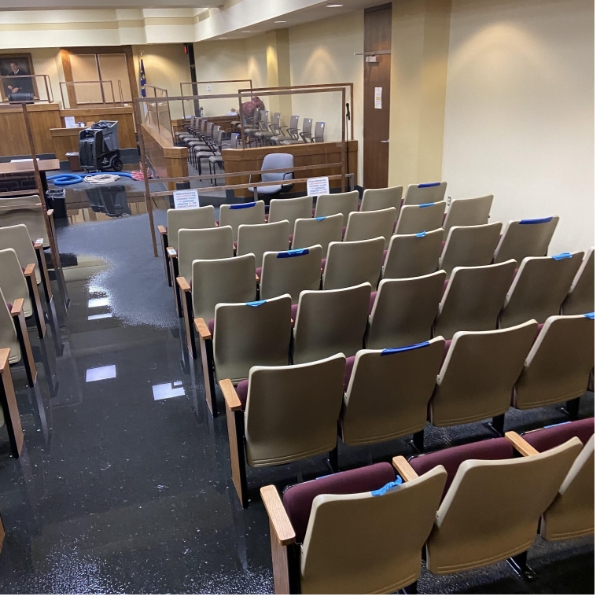
When a storm passes, visible damage often receives immediate attention. Broken windows, roof leaks, and standing water are obvious priorities. However, some of the greatest risks to commercial buildings remain hidden long after cleanup begins.
Water intrusion frequently creates conditions that expose environmental hazards capable of impacting occupant health, delaying reconstruction, and increasing restoration costs.
Mold Begins Growing Quickly
Many property owners assume mold requires weeks to develop. In reality, mold can begin growing within 24 to 48 hours whenever moisture remains trapped inside building materials.
Common locations include:
- Drywall cavities
- Ceiling plenums
- Carpet padding
- HVAC systems
- Insulation
- Wood framing
Even after visible water has been removed, hidden moisture can continue feeding mold growth if materials are not properly dried.
Water Damage Can Disturb Asbestos-Containing Materials
Many commercial buildings constructed before the 1980s contain asbestos in materials such as floor tiles, ceiling tiles, pipe insulation, roofing materials, joint compounds, and fireproofing materials.
While asbestos is generally safe when left undisturbed, storm damage and demolition activities can release fibers into the air if proper testing and abatement procedures are not followed.
Before reconstruction begins, buildings, especially older ones, should be evaluated for asbestos-containing materials to protect workers and building occupants.
Indoor Air Quality Can Decline
Moisture doesn’t only affect building materials—it also impacts the air occupants breathe. Water intrusion can contribute to:
- Mold spores
- Elevated humidity
- Bacterial contamination
- HVAC system contamination
- Persistent odors
Without proper drying, cleaning, and filtration, indoor air quality concerns may continue long after visible repairs are completed.
Contaminated Water Presents Additional Risks
Not all floodwater is the same. Stormwater may contain hazards like sewage, chemicals, petroleum products, biological contaminants and dangerous debris. Professional restoration teams evaluate contamination levels before determining appropriate cleaning and restoration procedures.
Why Environmental Services Matter
Effective storm recovery extends beyond drying the building. Environmental professionals may be needed to perform:
- Moisture mapping
- Mold assessments
- Asbestos inspections
- Air quality monitoring
- HEPA filtration
- Containment construction
- Environmental abatement
These services help ensure reconstruction begins safely and in compliance with applicable regulations.
Recovery Requires More Than Cleanup
Storm recovery should never stop at removing water. Proper environmental evaluation helps identify hidden risks before they become larger health, operational, or financial challenges.
Sasser Restoration provides comprehensive environmental services alongside emergency mitigation and reconstruction, helping commercial properties recover safely, efficiently, and with confidence.
Contact a Sasser Professional