

2026 El Niño Forecast: How Commercial Properties Can Prepare
Weather forecasts don’t often make headlines months before they impact businesses, but this year’s developing El Niño is different.
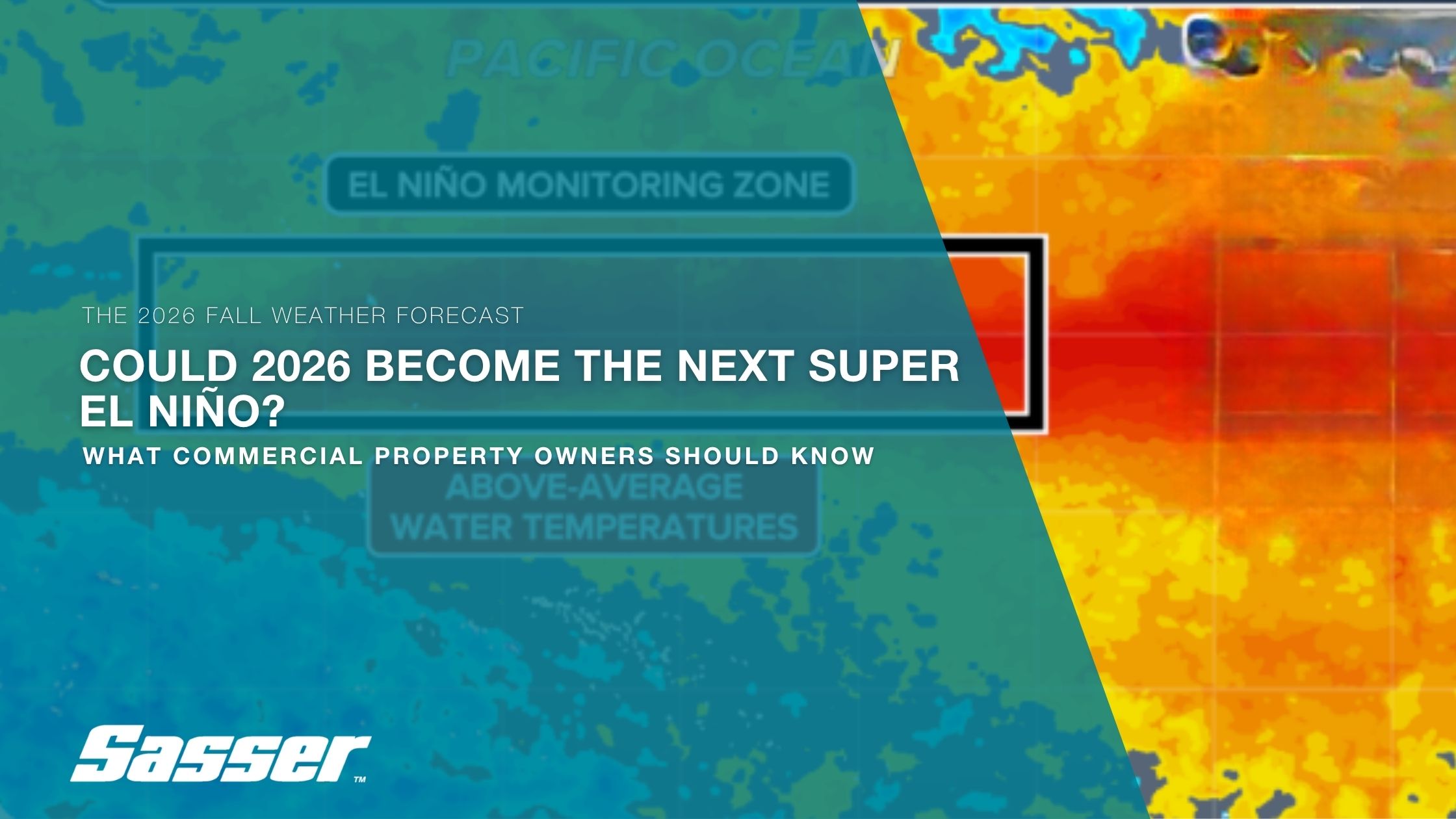
According to the National Oceanic and Atmospheric Administration (NOAA), El Niño conditions are expected to strengthen through the second half of 2026. While it’s too early to know whether this event will officially join the ranks of the historic “Super El Niño” years, forecasters agree that the atmosphere is becoming increasingly favorable for a strong event by late fall and winter.
For commercial property owners, facility managers and building engineers, that forecast deserves attention.
El Niño isn’t a single storm. Instead, it’s a large-scale climate pattern that influences weather across North America for months at a time. Those changes can increase the likelihood of prolonged rainfall, flooding, severe storms, coastal impacts and moisture-related building issues that often lead to expensive repairs and business interruptions.
Understanding what history tells us—and preparing before the weather shifts—can make all the difference.
What Is El Niño?
El Niño occurs when sea surface temperatures in the central and eastern Pacific Ocean become warmer than average. That warming changes atmospheric circulation across the globe, shifting where storms develop, how jet streams move and which regions receive above- or below-average rainfall.
Although the warming occurs thousands of miles away, its effects can be felt across much of the United States. From California’s winter storms to wetter conditions across the South and Southeast, El Niño has repeatedly influenced some of the country’s most disruptive weather events.
What Makes a “Super El Niño”?
Not every El Niño reaches the same intensity.
Meteorologists generally reserve the term “Super El Niño” for exceptionally strong events in which Pacific Ocean temperatures rise well above normal for an extended period. Only a handful of these events have occurred in modern history, but each has left a lasting mark.
The 1982-83 event produced catastrophic flooding, severe winter storms and billions of dollars in damage. Fifteen years later, the 1997-98 Super El Niño became one of the strongest ever recorded, bringing historic flooding to California, widespread severe weather across the southern United States and enormous economic losses worldwide.
More recently, the 2015-16 event contributed to powerful Pacific storms, flooding, landslides and prolonged periods of heavy rainfall that resulted in widespread property damage and costly mold issues in many commercial buildings.
While each event affected different regions in different ways, they shared one common theme: prolonged exposure to water.
Where Does 2026 Rank?
Current NOAA forecasts indicate that El Niño is likely to continue strengthening through the fall. Although it has not yet reached the intensity of the historic Super El Niño events, many forecasters believe it has the potential to become one of the stronger El Niño patterns of the past several decades.
Whether it ultimately reaches that threshold is less important than what businesses should do now.
History consistently shows that facilities that prepare before prolonged periods of severe weather experience fewer disruptions, lower repair costs and faster recoveries than those forced to react after damage has already occurred.
What Could This Mean for Commercial Buildings?
Because El Niño shifts weather patterns across broad regions, its impacts vary by location. However, many of the states Sasser serves—including California, Texas, North Carolina, Florida and much of the Mid-Atlantic—have historically experienced above-average precipitation, stronger winter storm systems or increased flooding during significant El Niño years.
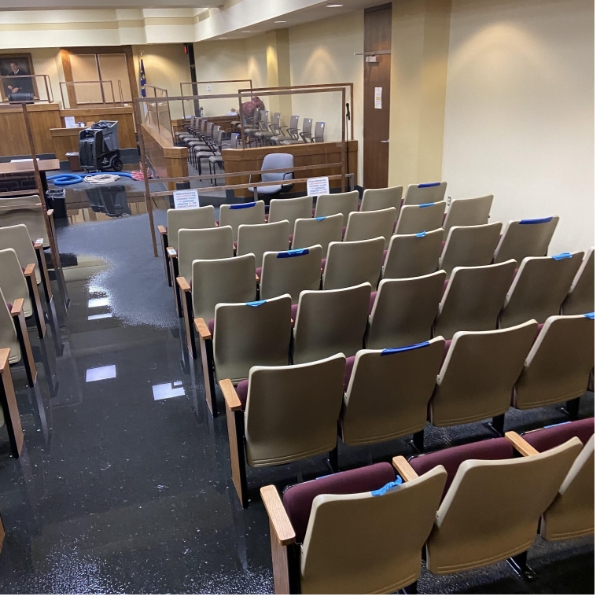
Along the West Coast, stronger Pacific storms can bring heavy rainfall, flooding, mudslides and drainage failures that threaten commercial campuses, industrial facilities and healthcare systems. Aging roofs, clogged drainage systems and vulnerable building envelopes often become the first points of failure after repeated storms.
Across the southern United States, wetter conditions frequently lead to flash flooding, roof leaks and water intrusion that can interrupt operations in office buildings, multifamily communities, manufacturing facilities and retail centers. Even small leaks can quickly become larger problems when buildings remain damp for days or weeks.
In the Southeast, including much of the Carolinas and Florida, extended periods of rainfall combined with elevated humidity create ideal conditions for mold growth. Buildings may never experience catastrophic flooding, yet hidden moisture inside walls, ceilings or HVAC systems can still result in costly remediation projects if left undiscovered.
For organizations responsible for mission-critical facilities—including hospitals, data centers, laboratories and industrial operations—the consequences extend beyond structural damage. Moisture can compromise electrical infrastructure, sensitive equipment and indoor air quality while creating operational downtime that often costs far more than the repairs themselves.
Why Preparation Should Start Now
One of the biggest misconceptions about severe weather is that preparation begins when the forecast turns threatening.
In reality, the most effective mitigation efforts happen months beforehand.
Late summer and early fall are ideal times to inspect roofing systems, verify drainage performance and identify areas where water has entered previously. Facilities should also review emergency response plans, confirm backup power capabilities and evaluate whether critical equipment is adequately protected against flooding or prolonged moisture exposure.
Moisture detection technology, including infrared imaging and professional moisture mapping, can also reveal hidden issues before they become visible. Identifying trapped moisture early can help prevent mold growth, preserve indoor air quality and reduce the scope of future restoration work.
Perhaps most importantly, commercial property owners should establish relationships with restoration partners before regional weather events occur. Following widespread storms, response resources often become limited as emergency calls increase dramatically. Having a trusted restoration contractor already in place can significantly reduce response times and help businesses return to normal operations sooner.
Looking Ahead
Whether 2026 ultimately earns a place alongside the historic Super El Niño events remains to be seen. What is already clear is that forecasters expect a strengthening weather pattern capable of bringing increased rainfall and more volatile conditions to many parts of the country.
For commercial property owners, preparation isn’t about predicting exactly what will happen—it’s about reducing risk before weather has the opportunity to disrupt operations.
At Sasser, we help commercial businesses, healthcare systems, multifamily communities, industrial facilities and mission-critical operations prepare for whatever the forecast brings. From emergency response planning and water damage restoration to commercial mold remediation, temporary climate control and large-loss catastrophe response, our teams are ready before, during and after severe weather.
As history has shown time and again, the businesses that weather major climate events most successfully are rarely the ones that react the fastest—they’re the ones that prepared first.
Contact a Sasser Professional