
Mold Growth After Water Damage: Understanding the Timeline and Why Fast Drying Matters
When a commercial property experiences a water intrusion, the clock starts immediately. Whether the source is a roof leak, burst pipe, sprinkler discharge, or flooding, moisture left behind can quickly lead to mold growth, structural damage, and costly business interruptions.
While every building and situation is different, understanding the mold growth timeline highlights why rapid water damage restoration and professional structural drying are critical.
0-24 Hours: Bacteria Become Active
During the first 24 hours, standing water and damp materials create ideal conditions for bacteria to multiply. At the same time, dormant mold spores that are naturally present in the environment begin to absorb moisture.
Although visible mold has not yet formed, the conditions necessary for growth are developing.
Priority actions:
- Stop the water source.
- Remove standing water.
- Begin structural drying and dehumidification immediately.
- Monitor moisture levels with professional moisture meters.
The sooner drying begins, the greater the chance of preventing mold growth altogether.
24-48 Hours: Mold Begins to Germinate
Within one to two days, mold spores may begin germinating if materials remain damp. Common indoor molds, including Aspergillus and Penicillium, are often among the first species to develop.
At this stage, mold may still be invisible to the naked eye, but growth has already started on wet building materials. This is why restoration professionals often say that the first 48 hours are the most important after a water loss.
48-72 Hours: Early Mold Colonies Form
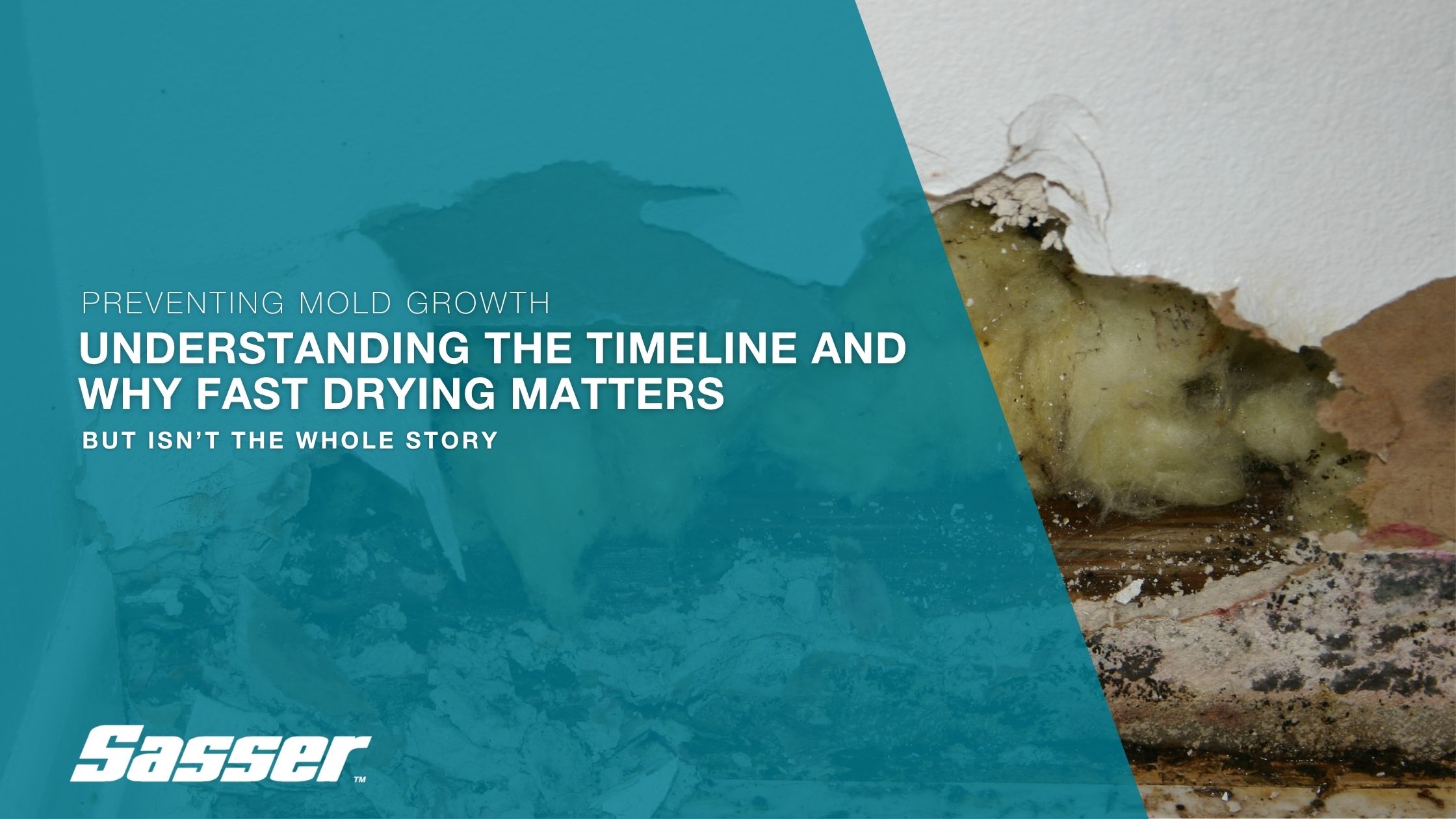
By the third day, early mold colonies can begin appearing on materials that have not been properly dried. Drywall, ceiling tiles, insulation, carpeting, wood framing, and paper products are especially vulnerable because they readily absorb moisture.
Once colonies establish themselves, remediation becomes more involved than simply drying the affected area.
3-5 Days: Rapid Mold Colonization
After several days of continuous moisture, mold growth accelerates significantly. Species such as Penicillium and Cladosporium can spread across damp surfaces, increasing the potential for:
- Indoor air quality concerns
- Material deterioration
- Unpleasant odors
- Increased remediation costs
For commercial buildings, this stage can also impact operations, employee productivity, and occupant comfort.
5-10 Days: Additional Mold Species Develop
As moisture remains present, additional mold species continue colonizing the affected area. By this point, contamination often extends beyond what is visible. Moisture may have migrated behind walls, beneath flooring, or into insulation and HVAC systems.
Professional moisture mapping and infrared inspections become essential for locating hidden moisture before repairs begin.
More Than 21 Days: Chronic Moisture Damage
Long-term moisture problems create conditions where more problematic molds, including Chaetomium and potentially Stachybotrys, may develop. By this stage, building materials are often severely damaged, and remediation becomes substantially more complex and expensive.
Chronic moisture can also contribute to:
- Structural deterioration
- Persistent odors
- Reduced indoor air quality
- Extended downtime for commercial facilities
The Best Mold Prevention Is Fast Drying
One of the biggest misconceptions is that mold only becomes a concern once it’s visible. In reality, mold growth can begin well before you see it. Professional water damage restoration focuses on removing moisture before mold has an opportunity to colonize building materials. This includes:
- Emergency water extraction
- Commercial dehumidification
- Structural drying
- Moisture mapping
- Environmental monitoring
- Ongoing moisture verification until materials return to acceptable drying standards
Protect Your Commercial Property
At Sasser Restoration, we understand that every hour counts after a water event. Our commercial restoration team uses advanced drying equipment, moisture detection technology, and proven restoration methods to minimize downtime and help prevent costly mold growth before it becomes a larger problem.
If your facility has experienced water damage, don’t wait for visible mold to appear. Contact Sasser Restoration immediately for professional commercial water damage restoration, structural drying, and mold prevention services.
Contact a Sasser Professional