

Building a Better Emergency Response Plan: Why Commercial Properties Should Establish a Restoration Partner Before Disaster Strikes
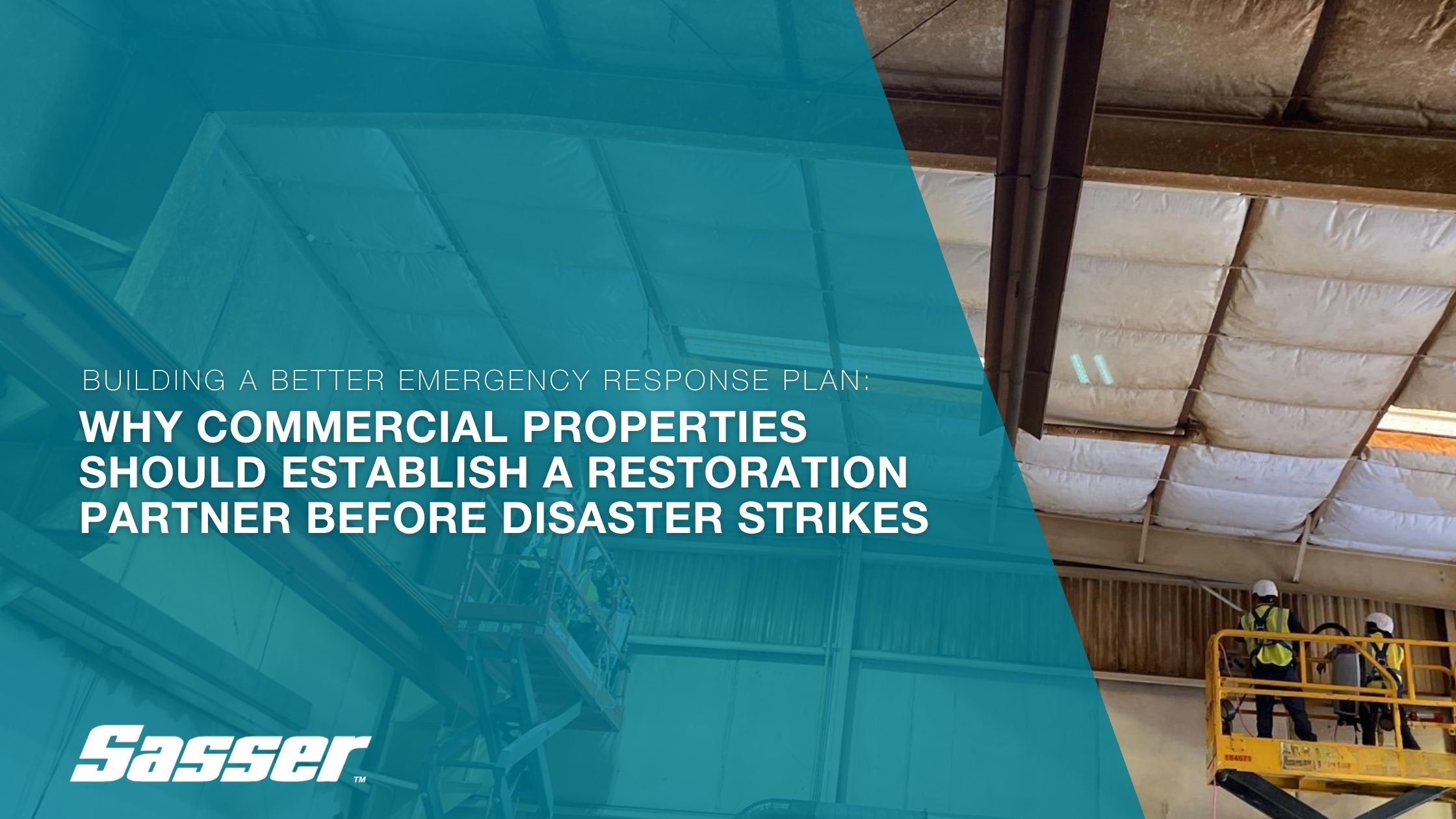
Disasters rarely happen when it’s convenient. A pipe bursts overnight, a severe storm rolls through on a holiday weekend, or an electrical fire forces a building evacuation before the workday even begins. For commercial property owners and facility managers, these events can bring operations to a standstill in a matter of minutes.
While no one can predict when an emergency will occur, organizations can control how prepared they are to respond. One of the most effective ways to minimize disruption is by establishing an emergency response plan and identifying a trusted restoration partner before disaster strikes.
At Sasser, we’ve seen firsthand how preparation can significantly reduce property damage, business interruption, and recovery time. Organizations that have a plan in place are often able to make informed decisions quickly, communicate effectively, and begin mitigation immediately. Those that don’t are often forced to make critical decisions during one of the most stressful moments their business will face.
Emergency Preparedness Is About More Than Severe Weather
When many people think about emergency planning, hurricanes, tornadoes, or floods often come to mind. While weather-related disasters certainly deserve attention, they represent only a portion of the emergencies commercial properties experience every year.
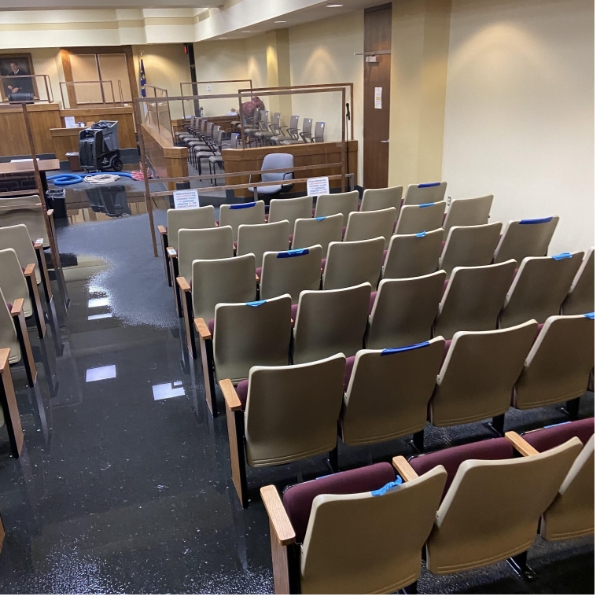
Water losses from broken pipes, HVAC failures, sprinkler system malfunctions, sewer backups, electrical fires, equipment failures, and accidental impacts can occur without warning. In healthcare facilities, manufacturing plants, office buildings, schools, retail centers, and multifamily communities, even a relatively small incident can disrupt operations, affect occupants, and create costly downtime.
An effective emergency response plan prepares organizations for both large-scale disasters and the everyday emergencies that occur far more frequently.
The First Few Hours Can Determine the Entire Outcome
One of the biggest misconceptions about restoration is that cleanup can wait until the next business day. In reality, the first several hours after an incident often have the greatest impact on the total cost of the loss.
When water is left standing inside a building, it quickly begins to spread into drywall, insulation, flooring, and structural materials. Equipment and furnishings may become damaged, indoor air quality can decline, and mold growth may begin within 24 to 48 hours if moisture is not properly addressed.
Fire damage presents similar challenges. Even after flames are extinguished, soot residues continue to spread throughout the building while corrosive byproducts begin damaging surfaces and sensitive equipment. Smoke odors can penetrate porous materials, making restoration more difficult the longer they remain untreated.
The sooner mitigation begins, the greater the opportunity to reduce secondary damage and shorten the overall restoration timeline.
Every Commercial Property Should Have a Written Emergency Response Plan
An emergency response plan should provide clear direction during stressful situations when quick decisions are required. Rather than relying on memory or searching for information during a crisis, facility teams should have documented procedures that outline responsibilities, communication protocols, and critical building information.
A well-developed plan identifies emergency contacts, utility shutoff locations, building access procedures, insurance information, and key vendors. It also establishes communication expectations between ownership, facility management, occupants, contractors, and insurance representatives.
Perhaps most importantly, the plan should be reviewed and updated regularly. Personnel changes, renovations, new equipment, or operational changes can all affect how an organization responds during an emergency.
Preparation Creates Confidence During a Crisis
Emergencies naturally create uncertainty. Employees want guidance, tenants expect updates, leadership needs accurate information, and insurance carriers require documentation.
Organizations that invest in emergency planning are often able to navigate these situations with greater confidence because roles and expectations have already been established. Instead of deciding who should call vendors or locate building drawings, teams can focus on protecting occupants and limiting additional damage.
Preparedness doesn’t eliminate stress, but it significantly reduces confusion.
Why Choosing a Restoration Partner in Advance Matters
One of the most common mistakes commercial property owners make is waiting until an emergency occurs to begin searching for a restoration company.
After a widespread storm or regional disaster, restoration contractors are often inundated with requests for service. Businesses that begin making calls after damage has already occurred may experience longer wait times simply because qualified crews are already committed elsewhere.
Establishing a relationship with a restoration partner before an emergency changes that dynamic. Your contractor becomes familiar with your property, understands your operational priorities, and can often respond more efficiently because much of the groundwork has already been completed.
Rather than introducing themselves during a crisis, they arrive prepared to execute a plan.
Restoration Is More Than Cleanup
Many people associate restoration companies solely with removing water or cleaning up after a fire. In reality, experienced restoration professionals provide much more comprehensive support throughout the recovery process.
Following an emergency, restoration teams help stabilize the property, document damages, perform moisture mapping, install drying equipment, protect unaffected areas, coordinate reconstruction, and assist with insurance documentation. They also help property owners make informed decisions about what can be restored versus what must be replaced.
This expertise allows facility managers to focus on maintaining operations while experienced professionals manage the technical aspects of the recovery.
Business Continuity Depends on Fast, Coordinated Response
For many commercial organizations, the greatest financial loss isn’t necessarily the physical damage to the building; it’s the interruption to daily operations.
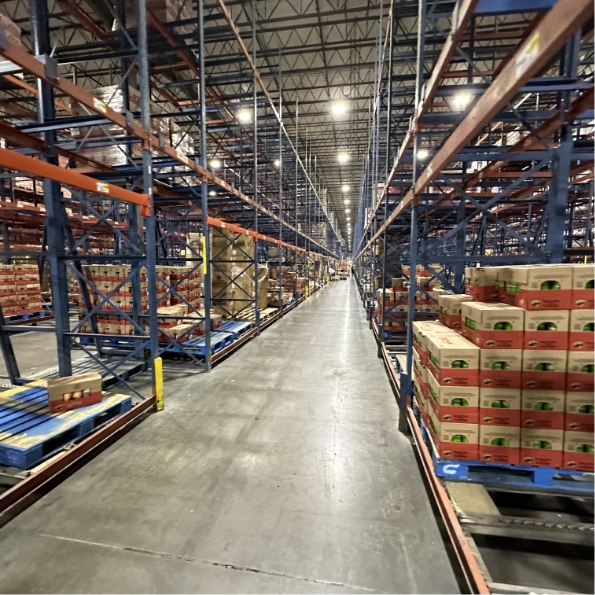
Manufacturing facilities may lose production time. Healthcare providers may need to relocate patients or postpone procedures. Office buildings can experience tenant disruptions, while retailers may lose revenue during closures.
An established restoration partner understands that successful recovery isn’t measured solely by repairing the building. It’s about helping businesses resume operations safely and efficiently while minimizing downtime.
That mindset is especially important for facilities that provide essential services to their communities.
Different Industries Face Different Risks
Although every commercial property benefits from emergency planning, each industry has unique operational priorities that influence its response strategy.
Healthcare facilities must protect patients, maintain infection prevention protocols, and comply with strict regulatory requirements. Educational institutions must safeguard students while minimizing disruptions to learning. Manufacturing facilities often need to protect specialized equipment and maintain production schedules. Data centers require rapid response to protect mission-critical infrastructure and sensitive electronics.
Multifamily communities must balance restoration work with resident communication, occupied units, and maintaining a safe living environment.
A restoration partner with experience across multiple industries can tailor response strategies to meet the specific needs of each facility.
Communication Is Just as Important as Restoration
Successful emergency response isn’t only about drying buildings or repairing damage. Communication plays an equally important role.
Property owners, tenants, employees, insurance adjusters, contractors, and leadership teams all require timely updates throughout the restoration process. Clear communication reduces uncertainty, improves decision-making, and helps projects move forward more efficiently.
Organizations that establish communication expectations before an emergency often experience smoother recoveries because everyone understands who is responsible for providing updates and making key decisions.
Don’t Wait Until Disaster Strikes to Build Relationships
One of the greatest advantages of partnering with a restoration company before an emergency is the opportunity to build familiarity.
Site visits, facility walkthroughs, and pre-loss planning meetings allow restoration professionals to understand building layouts, identify critical infrastructure, and learn the operational priorities of each property. These conversations create valuable relationships long before an emergency occurs.
When disaster strikes, those relationships become an asset. Instead of spending valuable time gathering information, response teams can immediately begin protecting the property and supporting the organization’s recovery goals.
How Sasser Helps Commercial Properties Prepare
At Sasser, we believe emergency response begins long before the first call comes in.
Our teams work alongside commercial property owners, facility managers, healthcare organizations, industrial facilities, educational institutions, multifamily communities, and technical environments to develop proactive response strategies that improve preparedness and reduce recovery time.
When emergencies occur, our services include 24/7 emergency response, water damage restoration, structural drying, fire and smoke restoration, mold remediation, environmental services, specialty cleaning, reconstruction, and catastrophe response. More importantly, we provide experienced professionals who understand the urgency of restoring operations—not just repairing buildings.
Whether responding to a localized water loss or a large-scale natural disaster, our goal remains the same: helping organizations recover safely, efficiently, and with as little disruption as possible.
Preparation Today Leads to Faster Recovery Tomorrow
Every commercial property will face unexpected challenges at some point. While you can’t control when disaster strikes, you can control how prepared your organization is to respond.
Developing a comprehensive emergency response plan, maintaining current building information, establishing communication procedures, and partnering with an experienced restoration company are all investments in your organization’s resilience.
When the unexpected happens, preparation doesn’t just save time—it protects people, preserves property, reduces downtime, and helps businesses recover with confidence.
At Sasser, we’re committed to helping organizations prepare before disaster strikes so they’re ready when every minute matters.
Contact a Sasser ProfessionalWarning: Attempt to read property "ID" on string in /srv/users/itadmin/apps/sasser/public/wp-content/themes/sasser_restoration/single.php on line 78