
Combustion By-Products Explained: Best Practices for Fire Damage Testing
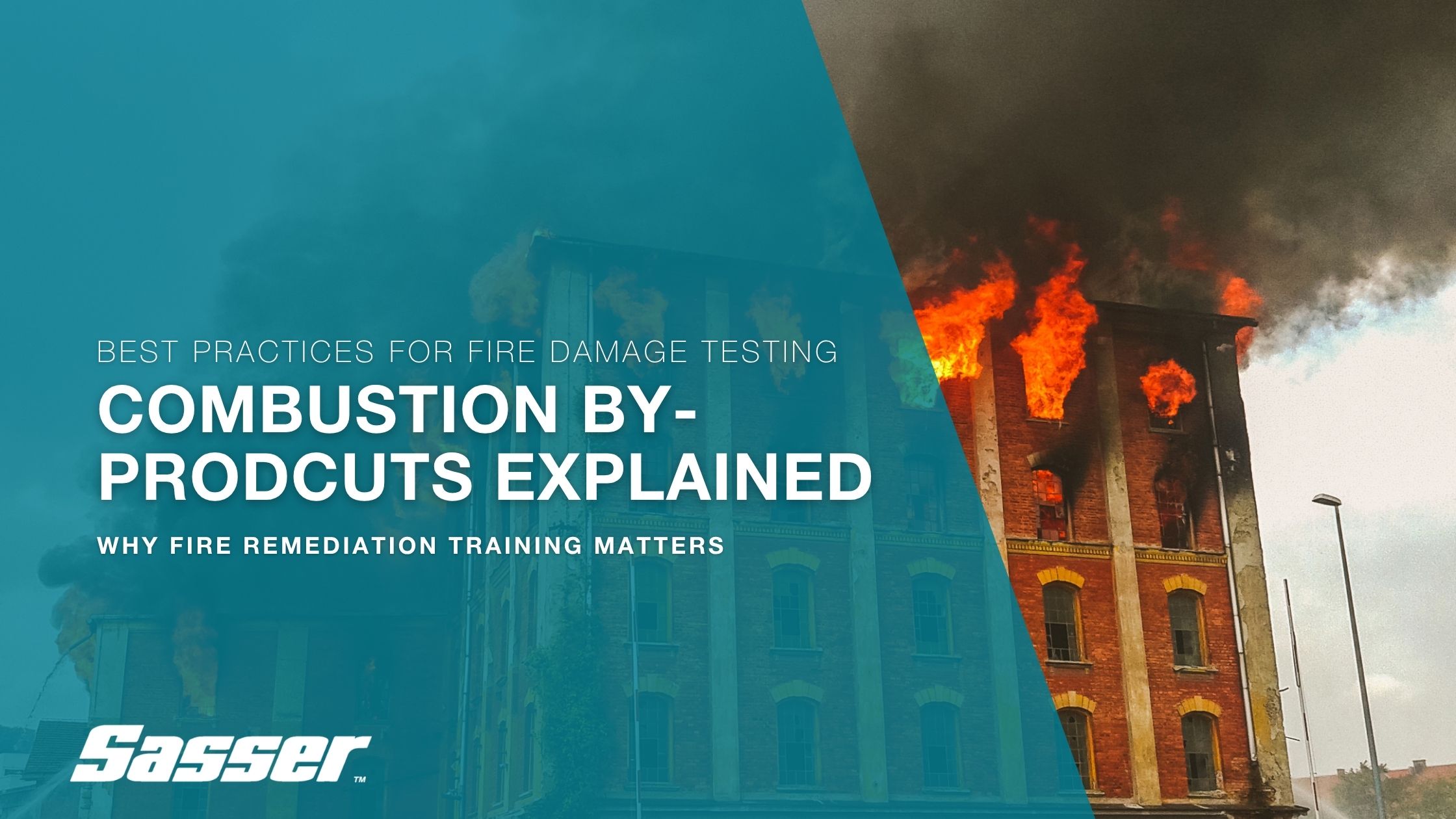
Fire damage doesn’t end when the flames are extinguished. In many cases, the greatest challenge begins afterward, when smoke, soot, and other combustion by-products remain throughout a facility. These contaminants can impact indoor air quality, equipment, operations, and occupant safety long after visible damage has been removed.
As fire-related losses continue to affect healthcare facilities, commercial properties, government buildings and industrial environments, the restoration industry is placing greater focus on how combustion by-products (CBPs) are identified, tested, documented, and cleared. The ability to provide consistent, defensible results is becoming increasingly important for facility owners, regulatory agencies, and restoration professionals alike.
What Are Combustion By-Products (CBPs)?
Combustion by-products are the residues and contaminants produced during a fire. These may include soot, char, ash, volatile organic compounds (VOCs), and microscopic particles that can spread well beyond the immediate fire area.
Because many CBPs are not always visible to the naked eye, determining the true extent of contamination requires a thoughtful and methodical approach. In sensitive environments such as hospitals, healthcare campuses, food processing facilities, and manufacturing operations, even small amounts of residual contamination can create serious operational and regulatory concerns.
That’s why proper testing and documentation matter just as much as the physical cleaning process itself.
Why Consistency in Testing Matters
One of the biggest challenges in post-fire remediation is inconsistency. Differences in sampling methods, environmental conditions, documentation practices, and interpretation of results can lead to confusion or disputes about whether a facility has truly been restored to a safe condition.
Establishing reliable baseline conditions before remediation begins is critical. Without accurate baseline data, it becomes difficult to measure progress or validate successful cleanup efforts later in the project.
Sampling consistency also plays a major role. Factors such as where samples are collected, how they are handled, and which testing methods are selected can significantly affect results. Poor sampling strategy can lead to false positives, false negatives, or conclusions that do not accurately reflect the condition of the environment.
As industry standards continue to evolve, restoration professionals are increasingly focused on creating processes that produce accurate, repeatable, and defensible outcomes.
The Importance of Defensible Documentation
Today’s restoration projects often face review from multiple stakeholders, including infection prevention teams, environmental consultants, insurance representatives, and regulatory agencies such as the Department of Health, Department of Agriculture, and Joint Commission.
In these environments, remediation is not simply about cleaning visible damage. It’s about providing documentation and validation that demonstrate the environment has been properly assessed and restored.
Clearance testing and reporting must support decision-making with reliable data and clearly documented methodology. Facilities need confidence that the remediation process aligns with industry standards, emerging guidance, and the unique risk profile of the building itself.
This is especially important in healthcare and mission-critical facilities, where downtime, contamination concerns, and regulatory scrutiny can have significant consequences.
A Continued Commitment to Education and Industry Best Practices
At Sasser Restoration, staying current with evolving industry guidance is an important part of delivering high-quality service to clients. Recently, Sasser hosted a combustion by-products training in partnership with Eurofins Built Environment Testing focused on testing methodologies, documentation practices, and post-fire clearance considerations.
The discussion covered topics including:
- Establishing baseline conditions prior to remediation
- Improving sampling accuracy and consistency
- Selecting testing approaches based on facility type and risk
- Avoiding false positives and false negatives
- Interpreting laboratory data effectively
- Aligning with evolving IICRC standards and industry guidance
More importantly, the session reinforced the value of collaboration and continued education within the restoration industry. As standards evolve and facilities face increasing regulatory expectations, ongoing training helps ensure restoration teams remain prepared to provide reliable, defensible solutions for clients.
Building Trust Through Better Processes
Successful fire recovery requires more than removing visible damage. It requires a clear understanding of environmental conditions, consistent testing practices, and documentation that can stand up to scrutiny.
By investing in continued education, industry partnerships, and evolving best practices, Sasser Restoration remains committed to being a trusted partner for clients navigating complex fire-related losses.
Contact a Sasser Professional